001 Blog for Luxury Executive Protection and VIP Security Services.

How to Hire the Best Executive Protection Company for International Travel

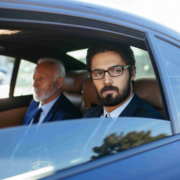
Will you be making international travel and in need of an executive protection service? In case it is your first time, you might not be familiar with some of the important things to look after before you settle on an executive protection company. In this article, we will be looking at the important things you need to consider before you hire an executive protection company.

Know What Suits You

Before you settle on any company, it is important that you first know what suits you. Executive Protection companies do offer protective services and the specialty is divided into different categories depending on the type of protection you will require.  In this case, executive protection service will comprise of protection agents who have been trained to offer protection to politicians, dignitaries, corporate executives, and high net value families. There is also the talent protection categories that have been trained to offer protection to musicians, athletes, celebrities and actors.

Executive Protection agents have been trained to keep a low profile and can easily adapt to or remain unobtrusive to your style of life.

Consider the Physique but protection work is about using the brain

Due to personal reasons or preferences, you might prefer hiring a 370 pound but courteous agent. Other people might prefer hiring someone who would appear like an ordinary man.  In case you feel like there are high chances of you being attacked, hiring someone that is big may look good but may not stop you from being attacked. The Executive Protection agents use meticulous planning with a gameplan that will ensure your survival in any attack.

Ensure You Are Aware of the private security licensing requirements

Before you settle on any protection company for your international travel, it is advisable that you check the countries or state requirements for executive protection licensing. Some countries or states might issue licenses to protectors who do not have proper professional training.  Don’t just go for any company; go for firms that meet the country’s or states licensing requirements.

Check a Company’s Certification

It is important you know there is a difference between being certified and holding a license. The license refers to having a company license in the state or country to operate & provide Executive Protection services.  This license also usually has a liability insurance requirement. We recommend any company must have 10 million in liability insurance as well as workman’s compensation insurance.

Research Extensive Background Checks

Go through the web check for previous criminal & civil records. If needs be, you can always make some payment for an in-depth criminal & civil history check. This will help in ensuring that you are not hiring a criminal as your executive protector.

Go through the Company’s Portfolio

Feel free to ask the company on the highest public figure they have worked with in the past and the reasons why they no longer work with the employer. In case the applicant possesses a proven accomplishment record with previous employers, there are high chances that they will make an excellent executive protection agent.

Conclusion

It is also advisable that you consider qualities such as intelligence, experience, gold standard responsiveness, integrity, attention to detail, discretion and flexibility.  If you consider the above tips, be sure of getting the best luxury private protection company for your international travel. uTraderAi

What is the Cost & Value of Privacy for High Net Worth Individuals?

With wealth comes fame and luxury but not privacy. The richer you get, the more attention you receive from the public, and as a result, your privacy begins to diminish. For this reason, billionaires and millionaires are paying a fortune to enjoy their fundamental right to privacy.

Hidden Homes

In this digital age, it is difficult to live a private life especially if you are a public figure, a celebrity or a billionaire. It is now easier to find people’s home addresses than it was decades ago. To stay invisible, millionaires and billionaires turn to pricey tactics such as building underground homes which cost about 185 million dollars or panic rooms worth half a million dollars. They also hide their assets and property from GPS tracking and reside in neighborhoods that are absent on the Google street view. These neighborhoods are pricey but private and very secure.

Private travel

Millionaires and billionaires have always opted for private travel for privacy and security reasons. It costs up to 30,000 US dollars to hire a private jet to Los Angeles from New York and owning a private jet is even more costly. Billionaires also own luxurious and expensive vacation homes and private islands where they can unwind and have fun without public or paparazzi interference. Jeff Bezos, the founder of Amazon, for example, owns a luxurious vacation home in Beverly Hills worth twenty-five million dollars. Some millionaires opt for private suites in hotels and services such as separate security lines to keep off the public eye. These suites and services do not come cheap, but privacy for the rich and famous comes with a price.

Digital Privacy

Internet and social media access are available and affordable for most people. The wealthy, however, interact and socialize differently through the internet. They utilize high-end privacy and security measures to protect their data. They also use exclusive networks such as ‘ Rich Kids’ with a monthly subscription of 1,000 dollars to socialize with other rich people. They have dating sites such as ‘Luxy’ that are exclusively for the rich. These networks enable them to only interact with their fellow rich people and not the rest of the world. Such sites require high payments to keep the public away and protect the privacy of its members.

Private Medical Services

Billionaires have the power to do just about anything their way. When sick, most wealthy people bring in doctors and set wards inside their homes instead of going to the hospital. These habits are very costly but also useful in maintaining privacy and security as compared to staying at hospitals that are accessible to anyone. Those who opt to get treated in hospitals secure luxurious private rooms in the best hospitals that keep them hidden and separate from the rest of the patients and staff. Some billionaires also prefer hiring highly trained teachers or trainers to educate or train their children from the comfort and privacy of their homes as opposed to institutions.

In conclusion, the right to privacy is a privilege that the rich have to pay to have.  There are companies that specialize in the billionaire’s privacy & confidentiality services that help high net worth clients set-up anonymous lifestyles. VexoriumFlex AI

Why Billionaires Must Invest in Privacy & Confidentiality

Privacy and Confidentiality are common terms used to refer to a billionaire’s protection of personal space and information. While confidentiality is concerned with safeguarding personal information such as health and financial records, privacy protects a person from unnecessary interference. Sadly, most people today do not enjoy their privacy and confidentiality rights.

Being rich and famous comes with its disadvantages. Billionaires attract so much attention from the public, and such interest compromises their privacy. Violation of privacy and confidentiality brings about anxieties and threatens a person’s security. For this reason, billionaires have gone to great lengths to ensure they protect their privacy.

Most wealthy people are known for saving their money in foreign accounts. A popular belief is that these rich people hide their wealth overseas to avoid heavy taxes. However, law-abiding billionaires know that being wealthy attracts people who will do anything to exploit your resources. These billionaires, therefore, find it wise to store a significant portion of their wealth in a different country. Foreign accounts provide the secrecy and confidentiality of a billionaire’s finances that protect them from greedy opportunists.

To maintain privacy and security, most billionaires invest in more homes. Having various estates helps them live a private life as they can settle in whichever place they feel secure and undisturbed. Since billionaires are very famous people, it is easy to trace where they live. A billionaire with one home will hardly enjoy the privacy of his or her home as they will always receive unnecessary visits and scrutiny from the media, the public, stalkers, and even burglars. This kind of attention can be very uncomfortable and can cause stress.

A billionaire’s personal information such as his or her health report can be used against him or her and is therefore sensitive. Rich people have many rivals, enemies or people after their money. These people will use whichever weakness the wealthy person has to their advantage. It is for this reason that billionaires pay a great fortune to private clinics for treatment and checkups. These medical institutions not only provide high-end medical care but maximum patient confidentiality as well.

Private islands are popular spots for billionaires on vacation. Such places guarantee them privacy and protection as they are away from the curious eyes of the public. They travel in private planes and own vacation homes where they can enjoy their holidays in private. These homes, islands, and planes cost a fortune but are necessary for ensuring that they enjoy their lives without too much attention, disturbance or insecurity. Billionaires also invest in expensive private schools where their children can learn and interact with other wealthy and celebrity kids without feeling out of place. Such schools are very secure and uphold the confidentiality of their students. These kids easily fit in such schools as they are treated as normal students and not as billionaires’ children.

In conclusion, privacy and confidentiality are more of a luxury for billionaires than a right. If you strive for wealth and fame, be prepared to pay for your privacy and protect your confidentiality. Smart Trade GPT

Quoted in Forbes: Mark Zuckerberg’s Security Costs Have Surged, Unlike Bezos, Ellison And Others

As the net worth of the five richest American company founders has more than doubled over five years, the personal security costs to their companies have not grown at the same rate—with the exception of Mark Zuckerberg.

The billionaire Facebook founder draws a salary of $1 and receives no bonus. But in the aftermath of last spring’s shooting rampage at YouTube’s headquarters, which left three people injured and rattled Silicon Valley, Facebook’s board of directors granted Zuckerberg a $10 million yearly allowance to pay for the personnel, equipment and services needed to keep him and his family safe. That was on top of the security that Facebook already provides Zuckerberg, who boasts a net worth of $62.3 billion. The company also pays for his personal aircraft (to the tune of $1.5 million) “in connection with his overall security program.”

Spending on Zuckerberg’s personal security increased more than 500% from 2012 to 2017—a sum that doesn’t take into account the $10 million allocated to Zuckerberg in July or the measures the company has taken to harden its defenses at its Menlo Park, California, campus. That compares with a 220% increase in his net worth over that same period, to $56 billion in 2017. Some of the security measures adopted appear ripped from the pages of a Tom Clancy thriller, including a rumored “panic chute” for making quick escapes.

American billionaires, and their lavish lifestyles, have come in for heightened criticism as income inequality in the U.S. reaches levels not seen since the years before the Great Depression. That raises questions about seemingly exorbitant corporate perquisites reserved for the wealthiest executives—like companies picking up the tab for personal security.

Forbes looked at the five richest founders of public companies in the U.S. and found no correlation between growth in wealth and increased benefit for personal security paid by the firms they founded. Rather, companies like Facebook are making assessments about risk based on an executive’s visibility and a company’s connection to controversy. Zuckerberg has emerged as the public face of a social network that is associated with some of society’s most divisive issues and has unprecedented influence over billions of people’s lives.

Amazon did increase spending on security for the world’s richest man, Jeff Bezos, as its founder’s visibility grew in Hollywood and in Washington, D.C., where the executive’s ownership of the Washington Post made him an occasional target of President Trump. But unlike with Zuckerberg, the security increase was barely a shadow of his rise in net worth. Bezos’s wealth soared to $131 billion this year, a staggering leap from $18.4 billion on Forbes’ 2012 list of the World’s Billionaires. Amazon spends $1.6 million a year on Bezos’ security, a figure that hasn’t changed since since 2012. In addition, the company picks up the tab for providing security at business facilities, according to regulatory filings. A company spokesperson said Bezos pays for personal security separately.

Berkshire Hathaway didn’t report security costs associated with protecting its avuncular CEO, Warren Buffett, until 2008, a year after a man with camouflage paint on his face and a fake gun tried to break into the billionaire’s home. In 2017, Berkshire spent $375,000 on personal and home security services for the Oracle of Omaha, a 16% increase from security spending five years prior. Over that same time Buffett’s net worth rose 72% to $75.6 billion. Today, his net worth stands at $82.5 billion.

Time and time again, Insite Risk Management president Christopher Falkenberg says, he’s been-hard pressed to find a correlation between a client’s net worth, his or her perceived risk and the amount of security he or she is willing to accept. In many cases, the level of security depends on what information is available about the executive in the public domain.

“Let’s say you have a totally under-the-radar billionaire. Nobody knew who they were,” Falkenberg says. “If that billionaire had a totally ordinary lifestyle, literally lived a life like the dentist down the street … there is no more risk to that person than there is the dentist down the street, unless someone is opening their bank statements.”

For Larry Ellison, the founder of software firm Oracle, security spending actually declined over the last decade, even as his net worth rose 74% over the past seven years, to a current $62.5 billion. The company pays the annual costs of maintaining security personnel at his “primary residence”—likely Ellison’s Japanese-style Woodside, California, estate with its koi pond and tea house, though the company wouldn’t say—an amount that totaled $1.5 million in 2017 vs. $1.7 million in 2007. Ellison paid for the initial purchase and installation of the security equipment and is responsible for ongoing maintenance and upgrades, according to SEC filings. Ellison served as Oracle’s CEO until 2014, and is currently chief technology officer and chairman of Oracle’s board.

Google parent Alphabet has not disclosed any spending in recent years to cover the personal security of its billionaire cofounder Larry Page, who is the parent company’s CEO. Nor has it disclosed any spending to protect Google cofounder and Alphabet president Sergey Brin. The last time Google devoted money to Page’s security was in 2006, when the company allocated $33,195 for transportation, logistics and personal security during personal travel for Page. Both Page and Brin, worth $50.8 billion and $49.8 billion on Forbes’ recently released Billionaires list, have elected to receive $1 annual salaries. The search giant did not respond to Forbes’ request for comment.

However, the company does provide security for former Alphabet CEO Eric Schmidt and Google CEO Sundar Pichai. According to the most recent SEC filings, Schmidt was granted $296,353 for personal security in 2017, while Pichai was given $637,538 for personal security.

Security analysts interviewed by Forbes say the amount a company spends to safeguard its top executives often depends on whether an executive or company is mired in controversy—or how recognizable an executive is.

“If you are talking more about a high-profile CEO that is discreet and is not very outspoken, then this individual may opt out of having security,” said Andres Paz Larach, a senior vice president at longtime private security agency Pinkerton.

Those who specialize in protecting celebrities and high net worth individuals say Zuckerberg’s visibility—and his association with Facebook’s numerous privacy breaches and Russian manipulation of the social network during the 2016 presidential election—heighten the risks. Business Insider recently reported that Facebook has dramatically expanded its security apparatus, as the social network girds against a range of perceived threats from car bombs to state-sponsored espionage to stolen prototypes. It reported that a 6,000-strong security army quietly protect its tens of thousands of employees and armed executive protection officers stand guard outside Zuckerberg’s homes.

“All it takes is one crazy guy in some state in the United States that’s fixated on that and he becomes fixated to the point where he’s blaming Zuckerberg,” said Kent Moyer, chief executive of World Protection Group, a security firm in Beverly Hills that counts celebrities and other high-net-worth individuals among its clients. “Add to that mental illness a fixation on guns and weapons, and before you know it this guy is up at the doorstep of Mark Zuckerberg.”

Originally published in Forbes, March 13, 2019 ZentoryxPrime AI

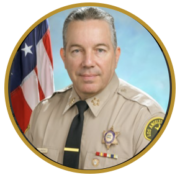
Newly-Elected L.A. County Sheriff to be Keynote Speaker at The World Protection Group Invitation Only Security Event

“This is going to be a fantastic event,” states Kent Moyer, “We are excited and honored to have the New L.A. County Sheriff Alex Villanueva speak at our event.”

LOS ANGELES, CA, UNITED STATES, January 18, 2019 — Kent Moyer, CEO and President of the World Protection Group, is head of the International Executive Protection & Consulting firm that supports law enforcement agencies in many service areas. Now, the World Protection Group is having its 6th Annual Security Briefing Luncheon on January 23, 2019, and newly elected L.A. County Sheriff Alex Villanueva has been announced as a keynote speaker at the event.

“This is going to be a fantastic event,” states Kent Moyer, “We are excited and honored to have the New Los Angeles County Sheriff Alex Villanueva speak at our event.”

L.A. County Sheriff Alex Villanueva’s birthplace of Chicago, Illinois has taken him to both Rochester and Queens, New York, then to Aguadilla, Puerto Rico, before an enlistment in the United States Air Force brought him to Southern California in 1983. He joined the Sheriff’s Department in 1986, and eventually met the love of his life, Vivian, while working at ELA Station in 1993. He is the proud father of a son, a US Army Iraq War veteran, and has been blessed with two grandchildren.

Sheriff Villanueva is a firm believer in education and is a great example of perseverance. He began his college education in Puerto Rico and continued while on active duty in the Air Force, eventually earning an Associate of Arts, Bachelor of Science, and Master of Public Administration Degrees, and ultimately, a Doctorate of Public Administration from the University of La Verne in 2005.

“Sheriff Villanueva is a tremendous leader,” explains Kent Moyer, “We are so excited to bring his level of expertise and dedication to this security briefing luncheon.”

“The World Protection Group is an international protection company with offices in Beverly Hills, New York, Mexico, & Shanghai, China. The World Protection Group has been at the forefront of technology innovation combined with executive protection, privacy, confidentiality, and the use of drones in the industry for the past twenty five years.” concludes Moyer, “We have never had a security breach or unresolved security incident. The goal is to be 100% proactive & preventive.”

Aurora DeRose
+1 310-396-6090 Beinveron

CEO Kent Moyer Quoted in Wired: Security in Silicon Valley

PROMINENT SILICON VALLEY companies spend liberally to protect their intellectual property. Some also shell out considerable amounts to protect their executives. Apple’s most recent proxy statement, filed earlier this month, shows the company spent $310,000 on personal security for CEO Tim Cook. But that’s a fraction of other tech giants’ expenditures.

Amazon and Oracle spent about $1.6 million each in their most recent fiscal years to protect Jeff Bezos and Larry Ellison, respectively, according to documents filed with the US Securities and Exchange Commission. And Google’s parent company, Alphabet, laid out more than $600,000 protecting CEO Sundar Pichai and almost $300,000 on security for former executive chair Eric Schmidt. In 2017, Intel spent $1.2 million to protect former CEO Brian Krzanich. Apple, Google, Intel, and Oracle declined to comment; Amazon did not respond to a request for comment.

Facebook CEO Mark Zuckerberg was the costliest executive to protect; Facebook spent $7.3 million on his security in 2017, and last summer the company told investors that it anticipated spending $10 million annually. In 2013 Zuckerberg’s security detail cost $2.6 million. That’s about the same amount Facebook spent last year to protect chief operating officer Sheryl Sandberg.

A spokesperson for Facebook declined to comment and pointed WIRED to an SEC filing where the company said a committee of its board had authorized an “overall security program” for Zuckerberg “to address safety concerns due to specific threats to his safety.” That included installation and maintenance of security measures at Zuckerberg’s residences, and the cost of security personnel there. In the filing, the company said, “We believe that the costs of this overall security program are appropriate and necessary.”

Security experts speculate that the planned increase in spending for Zuckerberg’s security in 2018 is likely due to his higher profile following last year’s Cambridge Analytica scandal, Congressional testimony, and data breaches.

The $10 million to protect Zuckerberg likely counts among the largest amounts spent on security for a US executive, says Arnette Heintze, CEO and founder of Hillard Heintze, a Chicago-based security consultancy that counts many Fortune 500 companies—though not Facebook—among its clients. “I’d put that $10 million among the top five highest in the country. And from what I’ve read in the media about Facebook, that seems to be an appropriate level of expense,” says Heintze. “When Zuckerberg was going up before Congress, I can imagine the increased threats. If you have 2 billion users and just 1 percent of those get mad, you could be getting a lot of correspondence. The people responsible for protection have to evaluate that; they literally have to make an assessment on every known statement. They can’t take the chance.”

Heintze worked for the US Secret Service for two decades before going into the private sector; security workers at tech companies often come from similar backgrounds. One staffer in Facebook’s executive protection department spent 12 years with the Secret Service, according to LinkedIn, while another spent several years in Europe protecting NATO’s secretary general. A Google manager working in executive protection spent eight years working as a special agent in the Department of Defense, according to his LinkedIn profile.

Kent Moyer runs the World Protection Group and 001, a pair of security firms in Beverly Hills, California, that count billionaires and executives among their clients. His protection arsenal includes bodyguards, security systems, drones for patrolling clients’ homes, armored motorcades, and extensive electronic privacy measures. Moyer advises clients and their families not to use their real names on social media, to purchase homes and other large assets in the name of LLCs (a common practice in Silicon Valley), texting only via encrypted apps, registering social media accounts to throwaway email addresses and phone numbers, and using credit cards registered to assumed names. “There are times where clients send me a text, and I say, I don’t want to text you using regular texting,” says Moyer.

(Last week, after Amazon CEO Jeff Bezos announced on Twitter that he and his wife, MacKenzie Bezos, were divorcing, National Enquirer published excerpts of text messages reportedly sent by Bezos to a woman he is said to be dating.)

“We don’t believe in our clients using regular phones,” says Moyer. “We set up anonymous phones; mine are in Faraday bags.” His firm also recommends using VPNs to obscure a device’s location and using search engines that don’t track users.

The attention provided by a security detail is often unwanted, Heintze says. “I can assure you that there is no executive in America that wants people hanging around them. It’s an intrusion. It’s an inconvenience, but it’s a necessary inconvenience for people that have real threats.”

While Silicon Valley firms haven’t disclosed many threats to the safety of their executives or offices, they have good reason to take precautions. In December, Facebook evacuated its headquarters after the company received a bomb threat. Last year an unhappy YouTube user entered the company’s San Bruno, California, headquarters and shot three employees before killing herself. And in 1992 the president of Adobe, Charles Geschke, was kidnapped at gunpoint and rescued by the FBI.

Originally posted in Wired, January 16, 2019 Daxloriz

How the DJI Spark Drone Could Have Helped the Las Vegas Police End the Vegas Sniper Attack

On the night of October 1, 2017, Stephen Paddock killed 58 people and injured hundreds in the deadliest mass shooting in US history. What was unique about the attack is that is was performed from above, in this case the 32nd floor of the Mandalay Bay Resort. Identifying the source of the gunfire was a challenge with reports of multiple attackers from multiple properties on the Las Vegas Strip. Eventually SWAT officers breached Paddock’s hotel room on the 32nd floor and found him dead with a self-inflicted gunshot.

The first step in responding to a sniper attack is locating the source of the attack. This can be determined by calls from witnesses. The problem is with the chaos from the “fog of war” inaccurate details are reported. There are also witnesses that have difficulty stating their position clearly, further adding to the confusion.

How a drone could have stopped the attack

An unmanned aerial vehicle, also known as a drone, would have been beneficial in locating the attacker. Especially when this attack was performed from altitude. The drone would have helped increase situational awareness for the SWAT officers confronting Paddock. The drone would have been able to provide a live feed for the incident commander allowing for a more strategic tactical response. The goal is always to save lives and minimize any injuries.

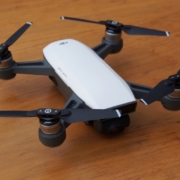
The DJI Spark Drone can be controlled by the palm of your hand, mobile device or remote controller. It can sense obstacles and can return home on your command without colliding into anything. It has facial recognition and can be launched from the palm of your hand and land back into your hand.

As of May,2018 it is estimated that at least 910 state and local police, sheriff, fire, and emergency services agencies in the U.S. have acquired drones. By sending a drone into a high-risk situation first, it avoids putting first responders at risk and allows for a more efficient response. Drones can be equipped with imaging tools to assess the environment. Photogrammetry can measure the environment using overlapping imagery. Infrared thermography or thermal imaging detects radiation and variations in temperature.

How are drones used?

Drones have assisted emergency response personnel in locating missing persons, surveying burning buildings, surveillance, hazardous material calls and SWAT operations. They can capture footage to prepare for the response to the aftermath of natural disasters including floods, earthquakes, tornadoes and hurricanes. Drones can monitor conditions of spills, leaks and other hazmat incidents.

What about the cost?

The number one company of drones that have 70% of the drone market is DJI a company from Shenzhen, China. The capabilities and technology of these drones are rapidly improving. DJI drones range from $149 to $10,000. The DJI Spark Drone costs just $399 USD. VexoriumFlex AI

Executive Protection: Delivering the WOW Factor

“Wow! This is amazing!”

Those are words we always want to hear from the World Protection Group (WPG) and 001 clients every day. To achieve this, we need to know what the WOW factor is, what it comprises and how to deliver it. Simple enough, a WOW factor means a quality and feature that is extremely impressive. In the Executive Protection field, it is critical to not only satisfy clients’ needs, but also make them feel impressed and leave a lasting footprint on them.

Kent Moyer, the CEO of WPG always says, “Anticipate the needs of the client before they ask.” One of the elements of the WOW factor is to develop an excellent service culture. When you provide a Gold Standard personalized service for your client, he/she might not expect that but is bound to notice. You have to always keep your radar on and antenna up. Listen carefully and look for opportunities. The more you understand the clients’ personal life, such as their birthdays, hobbies, daily schedules, and social life, the more personalized your service can be, such as writing a card for your client’s birthday, reminding your client his/her doctor’s appointment or dinner plans. This also leads to the ability to be able to evaluate any potentially harmful and threatening situations, as well as anticipate their wants and needs. A high level of trust and an emotional connection can hence be formed. For instance, if the client is having dinner with friends in a crowded restaurant, it is crucial to be extra vigilant to the surroundings, assess potential threats, and predict the client’s needs. When you aim beyond excellence and turn ordinary to extraordinary, it makes a significant difference in Gold Standard customer service.

The WOW factor is so important that it should be embedded in the DNA of each of our employees. In order to attain this, the corporate has to make the decision to adopt a Gold Standard culture in the company, which is the best model in delivering the WOW factor. Before establishing his own company, Mr. Kent Moyer took extensive classes at the Ritz-Carlton Leadership Center and received certifications for his training. He then utilized his knowledge and experience to train his WPG corporate team and Executive Protection Agents to have the WPG Gold Standard culture flowing in their blood. They are able to perform and deliver the WOW factor on a daily basis. Besides orientation and training, employee engagement is as significant. WPG selects employee of the month to recognize their outstanding performance and their service years. We also write our employees birthday cards for their birthdays to show our genuine care for them. Moreover, there is a once-a-week engagement email as well as a yearly weekend management retreat. When employees are being recognized, they are motivated to strive to achieve more, therefore delivering the stronger WOW factor to our clients.

Having happy and engaged employees are as important as having satisfied clients. We have to make sure that our Executive Protection Agents are proud of the company they work for and have a commitment to excellence. They have to be passionate in delivering the WOW factor every single day because clients are our most valuable assets and we have to make them feel cared, respected and well-protected. Our goal is to develop a strong emotional connection of trust with every client and to deliver a daily WOW factor. Eryxavin

How to Create a Gold Standard Culture in an Executive Protection company?

In the field of Security and Investigative services, executive protection work is in paramount importance to provide close protection and risk mitigation measures to ensure the safety of all clients. It is therefore critical to develop a Ritz-Carlton Gold Standard business culture that teaches Executive Protection Agents on how to deliver a gold standard service as well as protection in such high-level protective operations.

Gold Standard Executive Protection Service and Company Culture

Within a company, culture is like an iceberg. We can always only see the tip of the iceberg and not the bottom of it, but most of what constitutes a company’s culture is actually below the surface. As an advocate of the Gold Standard culture, the World Protection Group, Inc. pledge to proactively provide the finest personal services, security and safety in a low-profile way in order to ensure that our clients feel well-protected. Our goal is to always provide exceptional services, anticipate needs of the client, and go above and beyond to fulfill unexpressed wishes. It has to be embedded into the DNA of each of our employee.

Employee commitment and engagement are key factors to shape a company’s culture. According to the CEO Kent Moyer of 001 WPG, “We want to be perfect, but perfect isn’t good enough”. Striving for excellence is certainly better than just good. However, aiming beyond excellence is what a Gold Standard culture embraces. It is critical to develop a mystique that include both customers’ and employees’ engagement, with passion, pride, integrity, confidence, inspiration, motivation and satisfaction. The goal is to deliver a WOW factor that would leave a lasting footprint on our clients and develop an emotional connection with them.

In order to create a Gold Standard culture in a company, it is crucial to establish a sense of connection with all our most valuable clients. Never say “that is not my job”, but always strive to achieve more. Delivering thoughtfulness and care develops a deep connection with clients as well as creates an environment of trust. Always keep your radar on and antenna up. Be proactive and get to learn more about the clients’ personal life, such as their birthdays, hobbies, daily schedules and social life. This could greatly facilitate the relationship between employees (Executive Protection Agents) and clients. With sufficient knowledge of the client’s background, it is then easier to evaluate any potential harmful & threat situations, as well as anticipate and fulfill their needs. “At 211 degrees, water is hot. At 212 degrees, it boils. And with boiling water, comes steam. And with steam, you can power a train.”* Thinking one degree more of that extra service makes a significant difference in customer service. Such great effort would make our clients feel being cared, respected and well-protected.

Our Executive Protection Team

Behind the company’s Gold Standard Culture, a well-rounded and productive team of employees is of the utmost importance. WPG selects the best talents by screening candidates’ social media accounts to make sure there are no problems. Criminal and civil background checks, reference checks, drug tests, and also psychological assessments are performed as standard hiring procedures. Successful candidates are then required to complete our Gold Standard Training so that they would be empowered to create unique, memorable and personal experiences for our clients. We offer that training for free 4 times a year to reinforce the importance of this standard.

Providing genuine care and comfort for our clients is our highest mission. We not only ensure their safety, but also strive to build trust and connection with them. We fulfill even their unexpressed wishes and needs because we have to show our clients that no detail is too small to provide excellent service.

For more information call our corporate office at 310-390-6646. Oxelvian

Why Every Celebrity and High Net Worth Individual Should Use an Anonymous Phone

Let’s face it, your phone is a tracking device.

It is capable of broadcasting your location and communications to anyone. This is useful for navigating to work or for emergency services to determine your location. But as a celebrity or CEO of a Fortune 500 company, do you really want your identity attached to your location as well as a risk of being hacked?

In a 6-month study conducted on Tracking Human Mobility using WiFi signals, it was discovered that a third party that has no access to location data but access to records of WiFi scans can effectively determine the location of each individual 90% of the time by sending less than 20 queries to Google Geolocation API or Skyhook for example. By using the physical position of multiple wireless access points and the time you connect to those points, one can determine your location.

Your wireless carrier also logs details such as the phone numbers, duration and date and times for every text message and phone call you make. If you use any of the three major search engines, Google, Yahoo, or Bing, everything you search is being tracked. The search engines know more about you then you know about yourself.

What happens when you do not protect your privacy?

Between April 2013 and August 2014, Emilio Herrera hacked into 550 Apple iCloud and Gmail accounts which included 40 celebrity accounts. Herrera used a type of attack called phishing where he was able to obtain login information by sending an email that looked like it was from a legitimate company. The users that were targeted did not confirm the legitimacy of the emails before providing their login details, resulting in their accounts becoming compromised. Herrera was able to obtain sensitive photos, videos and other personal information.


In the past decade, many photos containing nudity of various celebrities were leaked. Stars including Jennifer Lawrence, Kate Upton, Cara Delevingne, Rihanna, Amber Heard and Ariana Grande were affected. Lawrence commented on the leak of her nude photos, “You can just be at a barbecue and somebody can just pull them up on their phone. That was a really impossible thing to process.”

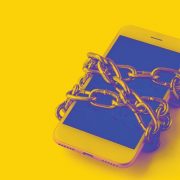
What can I do to protect my privacy? Set up an anonymous phone.

To start off, buy the phone with cash, use an alias name and prepaid service, then you can remove the association between your phone and identity.

Secondly, use encrypted emails, messages, and phone calls. You do not have to worry about your communications being logged or intercepted while in transit. In addition, you should never give out the number of anonymous phone to anyone. Never make a phone call or receive a call from that phone. Communication is done only by encrypted apps.

Whenever you are connected to a wireless network or are sending and receiving Bluetooth signals, your phone is susceptible to data theft. By placing your phone when turned off in a Faraday bag, these signals can be blocked. For example, one can determine the location of your residence through your phone. You should turn off your phone about a mile or two from your home and then place it in the Faraday bag.

The World Protection Group, Inc. (WPG) has worked with some of the most high-profile individuals in the world. We have also worked with corporate CEOs, political dignitaries, and famous celebrities. 001 WPG sets up anonymous phones for clients. Please use our 28 tips for setting up an anonymous phone.


Tips to Privacy, Security and Anonymity

1. Go to an Apple store and pay cash for the phone and get a receipt.

2. Do not give your name, e-mail, or any other information. If you purchase the phone online use a one time fake credit card that you can set up with an alias name and e-mail that does not connect to you.

3. Go to cell phone service company, pay cash for prepaid service and have them install it. Do not give them any information on you.

4. Add a VPN to the phone.

5. WIFI- Make sure there is no list of the wifi’s you used on the phone. Delete them. If possible only connect to wifi with your home network.

6. Set-up 2 layers of unencrypted e-mails. One fake e-mail that forwards to a real e-mail.

7. Keep Bluetooth off. If you have to use it, make sure you use a password to connect then turn it back off.

8. Add an encrypted e-mail app on your phone.

9. Add an encrypted texting app on your phone.

10. Add an encrypted app to make phone calls from.

11. When you register apps do not use your real name, e-mail, or phone number.

12. Do not ever make a call from the cell phone or receive a call from this phone. Never give the number out to anyone.

13. Never use Find my Friends. Turn it off.

14. Do not download videos or watch videos, games, or files.

15. Don’t text or receive texts on the phone texting system.

16. You must set-up a brand new Apple ID

17. Don’t use this phone for browsing on the internet.

18. Only use personal hotspots with a password.

19. Do not use airport wifi.

20. Disable Siri.

21. Touch ID and password: Use both touch ID and password to unlock your phone. This creates 2 layers of security.

22. Privacy settings – Do not use the camera for any app access unless needed. You can change the setting each time. Turn location services on for as few things as possible.

23. Only use one page on your phone with apps. Do not keep adding apps.

24. Do not use I-cloud for anything.

25. Set-up 9 alias names, e-mails, and phone numbers from various cities that you do not live in.

26. Buy a faraday bag for your phone and put the phone in the bag when not in use.

27. Never use any of your real information on this phone.

28. Use a two-factor authentication on all apps when possible.

For more information call our corporate office at 310-390-6646. Immediate GTP